
What to Do Immediately After a Stone Chip Hits Your Windscreen
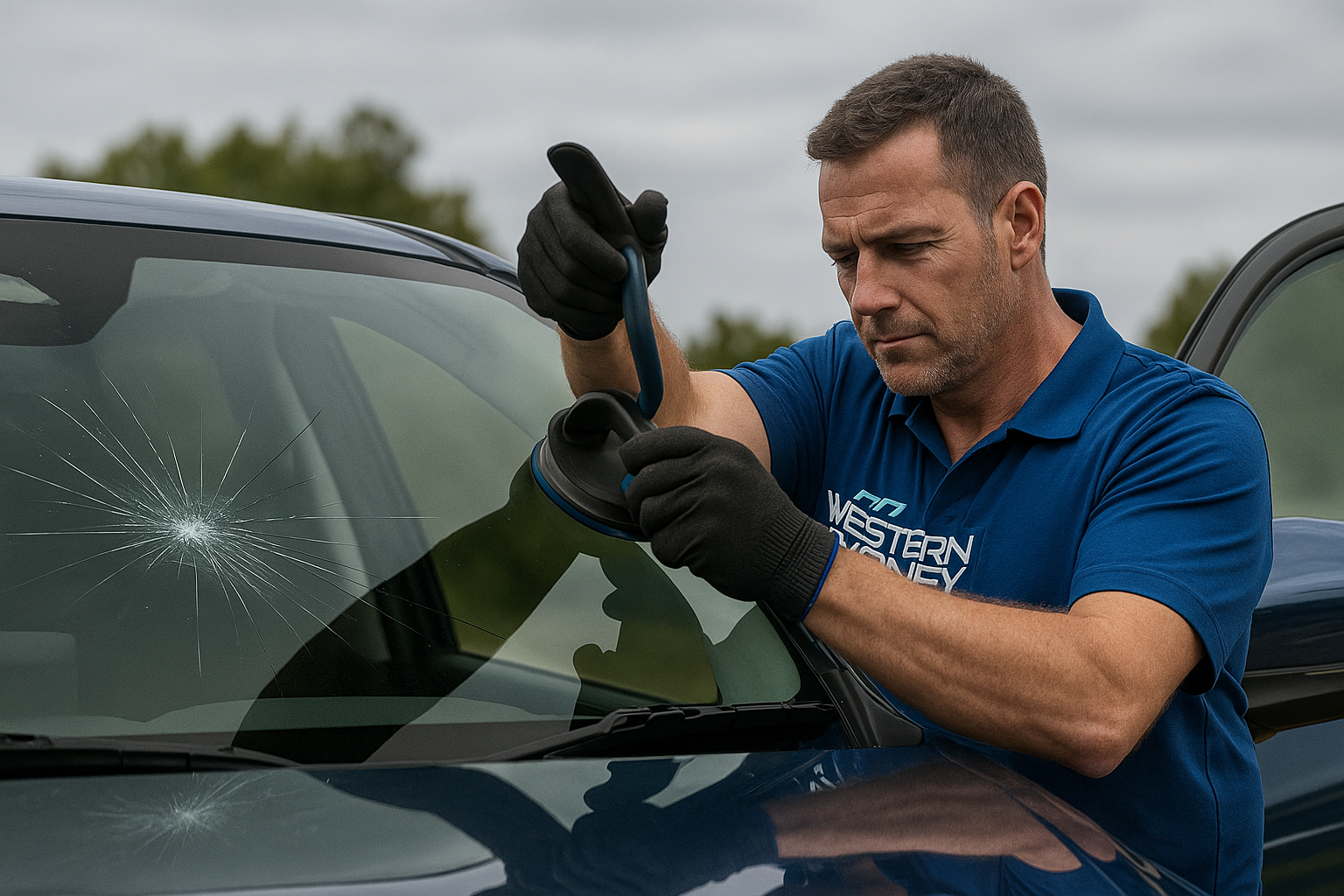
That sharp crack against the glass. The white mark that wasn't there five seconds ago. You're on the M7, the Great Western Highway, or somewhere along Richmond Road, a truck kicks up gravel, the car in front spits a stone, and now you're looking at a chip in your windscreen, wondering how serious it actually is.
Here's the short answer: most stone chips are repairable. But what you do in the next few hours determines whether it stays that way. A chip that costs under $100 to fix today can turn into a
full windscreen replacement costing $600 or more if you leave it. Temperature changes, road vibration, rain, and pressure all of it works against an untreated chip.
First Understand What Type of Chip You're Dealing With
Not all stone chips are the same. Before you do anything else, pull over somewhere safe and take a proper look in natural daylight. Knowing what type of chip you have tells you how urgent the situation is.
- Bullseye chip: A circular impact point with a cone-shaped break underneath. Common and usually repairable if caught early.
- Star break: A central impact with cracks radiating outward like a star. Still often repairable depending on the size and how many legs the star has.
- Half-moon: Similar to a bullseye but semicircular. Generally repairable.
- Combination break: An impact point with both a bullseye and radiating legs. More complex but can still be repaired if the total diameter stays under 25mm.
- Long crack: If the chip has already spread into a crack longer than 30cm, repair is usually no longer an option. This is how chips look after they've been left untreated through a cold night, heavy rain, or a temperature swing.
The difference between a repairable chip and a crack requiring full replacement often comes down to a few hours and a few degrees of temperature change. That's why speed matters.
Step 1: Don't Touch the Chip
The instinct is to wipe or press on the damage. But Don't. Pressing on a chip drives debris deeper into the fracture point and can cause it to spread immediately. Wiping it with your sleeve or a cloth can push grit into the break, which compromises how well the repair resin bonds later.
Check these three things from a safe distance with your eyes only:
- Size: If the chip is smaller than a 20-cent coin (roughly 25mm), repair is almost certainly possible.
- Location: A chip directly in the driver's line of sight is more urgent from a safety and legal standpoint. A chip at the edge of the windscreen carries more structural risk because the glass is under higher tension at the edges. Either needs attention fast.
- Depth: Surface chips sit in the outer layer only. A milky white or opaque appearance usually means the break has gone deeper. Deep chips need professional repair sooner.
Step 2: Cover the Chip Immediately
This is the most important thing you can do on the side of the road. Moisture and debris are the two main reasons chips spread. Water gets into the fracture, expands and contracts with temperature changes, and pushes the crack outward. Dirt and grit inside the chip make resin bonding harder and reduce the quality of any repair done later.
Use a small piece of clear sticky tape, packing tape or regular household tape and place it directly over the chip. Press it down flat. This keeps out water, road spray, and airborne grit until the repair is booked.
Do not use masking tape, gaffer tape, or cloth. Fibres enter the chip. Clear tape only, and only as a temporary measure not a fix. If you don't have tape with you, get the car undercover as soon as possible. A covered car park, a garage, or anywhere out of rain and direct sun buys you time.
Step 3: Avoid Temperature Extremes Until the Repair Is Done
Glass expands and contracts with heat and cold. A chip is a stress point, any rapid temperature change puts pressure on the fracture and can cause it to run into a full crack within minutes.
Avoid these until the repair is complete:
- Blasting the defroster directly onto a cold windscreen. This is one of the most common ways a chip becomes a crack overnight. Use the defroster on the lowest setting and let temperature change gradually.
- Pouring hot water on the screen in winter. Never do this regardless of whether the glass is chipped.
- Parking in full direct sun after a cold morning. The glass heats up fast, the chip expands. Park in shade where you can.
- Running the air conditioning on full blast when the cabin and glass are hot from sitting in the sun. Let it cool gradually.
- Slamming car doors. The pressure wave created when a door is slammed can be enough to push a chip into a crack. Close doors gently until the glass is repaired.
Step 4: Keep Wipers Off the Damaged Area
If it rains before the repair is done, run the wipers on the minimum speed needed for visibility. Wiper blades dragging across a chip can catch on the impact point, worsen the fracture, and drag abrasive grit across the surrounding glass.
If the chip is sitting directly in the wiper path, this becomes urgent. Either get the repair booked same-day or park undercover and avoid driving in the rain until it's fixed.
Step 5: Book the Repair Within 24 to 48 Hours
Stone chips do not stay stable. Road vibration alone, driving over speed bumps, rough road surfaces, or even Western Sydney's patched bitumen, creates enough micro-movement to push a chip into a crack.
Book a mobile repair within 24 to 48 hours of the chip happening. Mobile technicians come to your home or workplace, there's no need to drive across
Penrith or
Parramatta with an untreated chip. The repair itself takes 30 to 45 minutes and the glass is ready to drive on shortly after. For a full breakdown of
what chip repair costs, this guide to windscreen chip repair costs covers pricing by chip type.
Can You Drive With a Chipped Windscreen in NSW?
Technically yes, in the short term, but with important conditions. In NSW, it is illegal to drive a vehicle with a broken windscreen that obstructs the driver's vision. A chip in or near the driver's direct line of sight within the wiper sweep zone can be considered an obstruction and may result in a defect notice. A chip that has spread into a crack makes this even clearer.
The practical rule: if the chip is small, not in your direct line of sight, and has not spread, you can drive to work and back while waiting for the repair. If it's in your direct sightline, if it's spreading, or if it's affecting your ability to see clearly, you should not drive the vehicle until it's fixed.
Do Not Use a DIY Chip Repair Kit
Walk into any auto parts store in Western Sydney, and you'll find windscreen chip repair kits for $15 to $30. They look simple. They're not worth using. Because DIY kits use low-grade resin that doesn't cure properly without professional UV equipment. The result is often a visible, cloudy repair that distorts the glass, which is worse for the driver's vision than the original chip. Poorly filled chips also don't bond fully, meaning the repair fails under temperature change and the chip continues to spread underneath the resin.
A professional repair uses optically matched resin injected under controlled pressure, cured with calibrated UV light, and polished to restore clarity. The difference in outcome is significant. If you've used a DIY kit and the result is cloudy or the chip is still spreading, let a technician assess it. In some cases, the DIY repair can be worked around. In others, it complicates the professional fix.
In Modern Cars: Check Whether the Chip Is Near a Sensor or Camera
If your car was manufactured after 2018, there's a strong chance it has a camera, rain sensor, or ADAS (Advanced Driver Assistance System) sensor mounted on or near the windscreen, usually behind the rear-view mirror at the top-centre of the glass.
A chip anywhere near these sensor zones needs to be disclosed to the repairer when you book. Repairing resin in or near a camera zone can affect sensor accuracy, and some positions make repair inadvisable even if the chip is small. Your technician will assess whether the location affects repairability and whether ADAS recalibration is needed after any repair or replacement.
What About Your Insurance?
Check your policy before paying anything. Most comprehensive car insurance policies in Australia cover windscreen chip repair. Many cover it with zero excess, meaning the repair costs you nothing out of pocket, and chip repair claims typically do not affect your no-claim discount.
The process is straightforward: call your insurer, tell them you have a stone chip, and ask whether it's covered. They'll either give you an approved repairer or let you choose one. The repair itself is often billed directly to the insurer.
If you pay out of pocket, chip repair at a professional workshop or mobile service in Western Sydney typically runs between $50 and $99, depending on the chip type and size. That's the window, act within 24 to 48 hours, and you're in that range. Leave it, and you're looking at replacement costs.
When Is It Too Late to Repair the Chip?
Repair is no longer an option when:
- The chip has spread into a crack longer than 30cm
- The crack is branching in multiple directions across the glass
- The damage is at the very edge of the windscreen, where structural integrity is compromised
- The chip sits directly in the driver's critical vision zone (centre of the glass, within the wiper sweep)
- The damage has penetrated both layers of the laminated glass
If any of these apply, the windscreen needs replacing, not repairing. This breakdown of windscreen chip vs crack repair explains the cutoff points in detail.
Frequently Asked Questions
How fast can a chip spread into a crack?
In the right conditions, a cold morning followed by a warm afternoon, or a door being slammed, a chip can spread into a crack within hours. Overnight temperature drops in Western Sydney's cooler months are one of the most common causes.
Is a stone chip covered by comprehensive car insurance in Australia?
In most cases, yes. Many insurers cover chip repair with no excess. Call your insurer and ask before paying.
How long does a professional windscreen chip repair take?
Typically 30 to 45 minutes. The glass is safe to drive on shortly after the resin cures.
Can all stone chips be repaired?
No. Chips smaller than 25mm that are not in the driver's direct line of sight and have not spread are usually repairable. Chips that have turned into cracks, chips at the edge of the glass, or chips near ADAS sensor zones may not qualify.
What if the chip is in my direct line of sight?
This affects both repairability and legality. A repair in the critical driver vision zone can leave optical distortion. In NSW, driving with an obstructed windscreen can result in a defect notice. Have it assessed by a technician immediately.